Categories
Parents Zone

痴身:分離焦慮
Obsession: Separation Anxiety

撰文:香港註冊心理學家 程衛強

嬰兒約在九個月開始,孩子變得異常癡身,即使媽媽上洗手間,也可能會顯得非常的焦慮,抱緊媽媽不放,甚至放聲大哭。

分離焦慮可以引申出兩種不同的反應。在某些情況下,與照顧者分離時,嬰兒會出現尋求依附的行為,如抱著媽媽不放、用盡方法找尋媽媽、或不論媽媽到那裡就爬到那裡等等(Ainsworth, Bell, & Stayton, 1971);分離亦可能會衍生出絕望、對抗、分離(Detachment)等行為,視乎分離的時間(Bowlby, 1960; Robertson & Robertson, 1989)。


孩子面對分離的反應,亦會因應不同的環境而有所改變,例如在熟悉的家居環境中,較在一個陌生的環境中,孩子會出現較少的憂慮感(Ross, Kagan, Zelazo, & Kotelchuck, 1975)。

Written by: Hong Kong Registered Psychologist, Ching Wai Keung


Around nine months of age, babies become unusually clingy. Even if the mother goes to the bathroom, the baby may appear extremely anxious, clinging tightly to the mother and even crying loudly.

Separation anxiety can lead to two different types of reactions. In some cases, when separated from the caregiver, the baby will exhibit attachment-seeking behaviors, such as clinging to the mother, trying every possible way to find the mother, or crawling wherever the mother goes (Ainsworth, Bell, & Stayton, 1971). Separation can also result in behaviors such as despair, resistance, and detachment, depending on the duration of the separation (Bowlby, 1960; Robertson & Robertson, 1989).


A child’s reaction to separation can also change depending on the environment. For example, in a familiar home environment, the child will exhibit less anxiety compared to being in an unfamiliar environment (Ross, Kagan, Zelazo, & Kotelchuck, 1975).

在孩子約七個月時,物件恒存概念開始出現,他們明白即使看不見某人或物,不代表他消失了。當孩子能夠建立這個概念,他們的分離焦慮會相對降低。若媽媽能夠經常與孩子溝通、表示出對嬰孩的正面情緒及感覺、並給予適當刺激及協助者,孩子較易掌握並應用物件恒存概念於物件及人身上(Chazan, 1981)。

協助孩子協助分離焦慮,需要一定的時間,讓孩子與照顧者發展出親密的、依附的情感關係(Attachment),並待孩子本身的發展成熟,方能湊效。以兩歲的幼兒來說,他們能夠以照片來緩和他們與照顧者分離的愁情(Passman & Longeway, 1982);三歲的孩子甚至可以於父母不在場的情況下,在祖父母家過夜。

孩子能否培養出此等「能耐」,取決於照顧者與孩子能否建立出緊密的情感關係,當相互間的關係得以建立,孩子可以透過想像父母的形像,及回憶父母的愛,以安撫他們因分離而出現的焦慮感(Development Through Life, Barbara M. Newman, Philip R. Newman, Wadsworth, 2003)。

round seven months of age, the concept of object permanence begins to emerge in children. They understand that even if they cannot see someone or something, it does not mean that the person or object has disappeared. When children are able to establish this concept, their separation anxiety will relatively decrease. If the mother can frequently communicate with the child, express positive emotions and feelings towards the infant, and provide appropriate stimulation and assistance, the child will more easily grasp and apply the concept of object permanence to both objects and people (Chazan, 1981).

Helping children cope with separation anxiety requires a certain amount of time, allowing the child and caregiver to develop a close, attached emotional relationship (Attachment), and waiting for the child’s own development to mature before it can be effective. For a two-year-old child, they can use photographs to alleviate their feelings of sorrow when separated from their caregiver (Passman & Longeway, 1982); a three-year-old child can even stay overnight at their grandparents’ house without their parents being present.

Whether a child can develop this kind of “resilience” depends on whether the caregiver and the child can establish a close emotional relationship. Once the mutual relationship is established, the child can soothe their anxiety caused by separation by imagining the image of their parents and recalling their parents’ love (Development Through Life, Barbara M. Newman, Philip R. Newman, Wadsworth, 2003).
Categories
Parents Zone Parents Zone Parents Zone Parents Zone Parents Zone Parents Zone Parents Zone

孩子是個打人小惡霸?
Is My Child a Little Bully?

晚上失控
Losing Control at Night

孩子是個打人小惡霸?
Is My Child a Little Bully?

撰文:資深註冊社工李淑輝姑娘

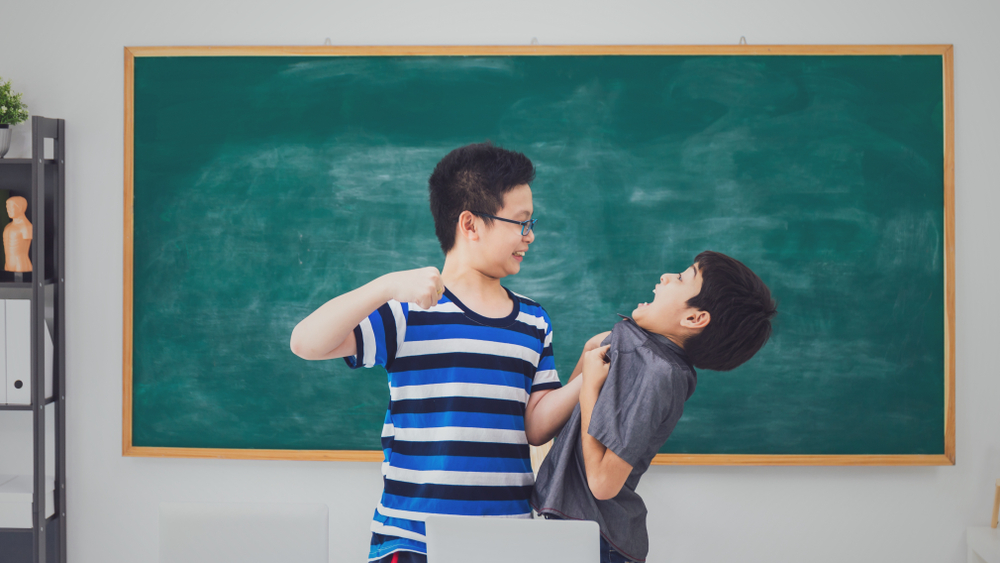
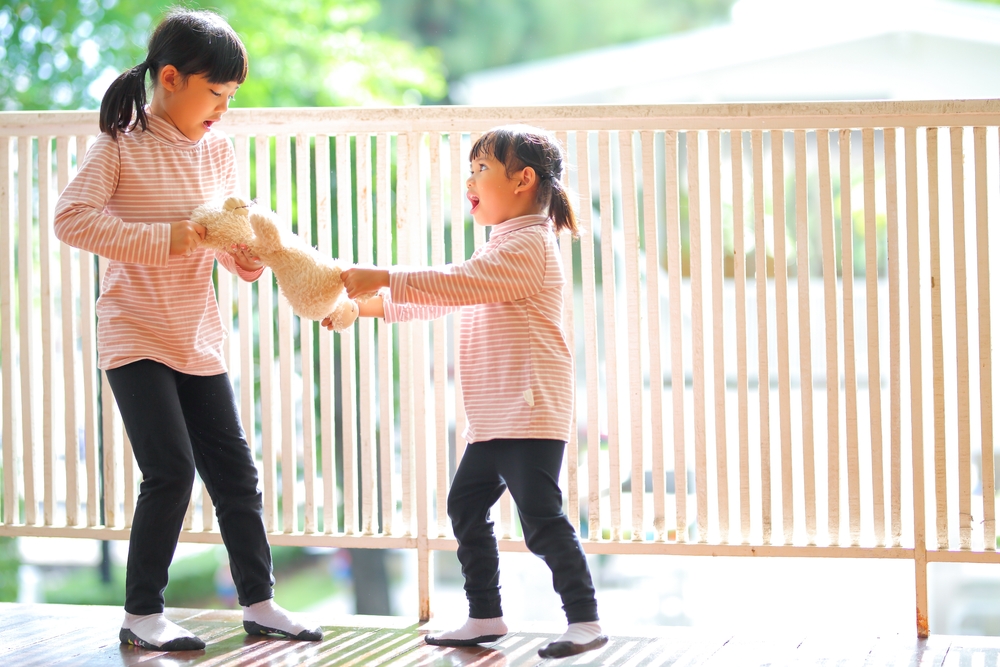
無論是爭玩具、遊戲中輸掉和排隊爭先恐後……每當遇上不如意,常見孩子會用推撞打人的方式去處理問題,這亦是父母常感頭痛的事為甚麼孩子是個打人小惡霸呢? 

1.   情緒和行為混為一談?

「你不可以嬲就發脾氣打人!」孩子因為出現情緒 -「嬲」,所以出現發洩行為 -「打人」。然而,父母可以禁止孩子的打人行為,但不能禁止他有「嬲」的情緒,孩子更不會因父母禁制「嬲」,而把情緒即時緩和過來。父母要教導孩子情緒和行為須分開處理 -「我明白弟弟拿走你的玩具,所以你很嬲,但你不可打人!」


Written by: Miss Jody Lee, Senior Registered Social Worker

Whether it’s fighting over toys, losing games, or rushing to be first in line, it is common to see children using pushing, shoving, and hitting to deal with situations that don’t go their way – which is also a constant headache for parents. Why does a child exhibit bullying behavior? 

1.    Are emotions and behaviors conflated?

“You cannot get angry and hit people!” The child may experience an emotion – “anger”, which leads to a behavioral response – “hitting”. However, while parents can prohibit the child’s hitting behavior, they cannot prohibit the child from feeling “angry”. The child will not immediately calm their emotions just because the parents have banned “anger”. Parents need to teach the child to separate emotions and behaviors – “I understand you are very angry that your brother took your toy, but you cannot hit him!”


1.   A餐無益不要吃!


「你不可打弟弟,總之不可打弟弟啦。」父母只叫孩子不要吃A餐,因為吃了會痴肥無益,但又沒有給他BCD餐的選擇,如弟弟再次取走他的玩具,十居其九,他仍會繼續吃A餐。父母聲嘶力歇地叫孩子不可打弟弟(A),跟著應該提供選擇 - 「不可打人,如果弟弟取走你的玩具,你可以告訴他:『玩具是我的,我玩完才給你』(B餐),亦可以請媽媽評理(C餐),或者讓給弟弟先玩 (D餐)……


2.   孩子絕對會接受挑戰!


「你試下再打弟弟,信不信我以後不要你?」父母意圖用恐嚇方式來鎮壓孩子打人行為,許多時候會適得其反,因為現代的孩子絕對會接受挑戰的!孩子會記恨父母和弟弟,會伺機出拳,再次攻擊弟弟。父母說過如他再犯會不要他,不論會否言出必行,親子關係已陷於僵局。其實,父母只是一心希望孩子做出好行為,應該直截了當地說出要求:「請你停手!」


3.   孩子打我,不痛,我能忍受?


無論孩子如何生氣或不滿,當他做出傷人、傷己和破壞性行為,父母必須即時制止。假若平日孩子慣性不開心的時候,就打人洩憤,由於力度不大,大人又能承受痛楚,所以不被阻止,孩子便會誤以為攻擊他人是沒有問題的。父母有責任即時制止及清楚表明,孩子的打人行動是不被接納的。


其實,孩子不是天生的小惡霸,他在成長過程中,身邊的人在陪伴他的同時,又悉心教導他正確處理問題的方法,孩子才能發展成熟,獨立成材。

1.    Don’t eat Meal A if it’s not good for you!


“You cannot hit your brother, just don’t hit him at all.” Parents may simply tell the child not to engage in an undesirable behavior (Meal A) without providing any alternative (Meal B, C, D) options. If the brother takes the child’s toy again, the child will likely continue to “eat Meal A” (hit). Parents should not only prohibit the undesirable behavior, but also provide alternative, appropriate ways for the child to respond – “You cannot hit, but if your brother takes your toy, you can tell him: ‘The toy is mine, I’ll give it to you when I’m done’ (Meal B), or you can ask me to help settle it (Meal C), or you can let your brother play with it first (Meal D)…”


2.    Children will absolutely accept challenges!


“If you hit your brother again, I won’t want you anymore.” Parents may intend to suppress the child’s hitting behavior through intimidation, which often backfires, as today’s children may see this as a challenge. The child may resent the parents and the brother, and look for opportunities to hit the brother again. Instead, parents should directly state their expectations: “Please stop hitting your brother.”


3.    My child hit me, but it doesn’t hurt. Can I tolerate that?


No matter how angry or dissatisfied the child is, when they engage in harmful, self-destructive, or destructive behaviors, parents must intervene immediately. If the child habitually vents their frustration by hitting others because the force is not great and the adults can endure the pain, the child may mistakenly think that attacking others is acceptable. Parents have the responsibility to immediately stop and clearly indicate that the child’s hitting behavior is unacceptable.


In fact, children are not born as little bullies. As they grow, the people around them, while accompanying them, should carefully teach them the right ways to deal with problems. Only then can the child develop maturity and become independent.

《融- 和平天使全球計劃之國際和平日百位校長共創奇蹟》

垃圾是誰的?孩子品德培育須透過家校合作才成功
Whose trash is it? The cultivation of children’s character must be achieved through home-school cooperation to be successful

撰文:張偉菁校長

眼前有這樣兩組鏡頭:

鏡頭一:

在熱鬧的街頭,正隨父母一起閒逛的小男孩,發現腳下有一個廢棄的汽水罐,他走過去撿起汽水罐,準備扔到不遠處的垃圾箱。不過,媽媽發現了後,要求孩子將手中的汽水罐扔掉,但孩子不從。接著,爸爸也走了過來,訓斥道:「笨蛋,怎可以撿起這麼髒的東西,你又不是清道夫!」小男孩卻說:「老師說過了,要愛護環境,不能亂丟垃圾!」媽媽說:「這又不是你扔的,管它呢!」小男孩看起來很困惑,卻又不得不把撿在手中的垃圾扔回地上。

鏡頭二:

在熙熙攘攘的火車站月台,一位年輕的媽媽帶著一個大約56歲的男孩。孩子在喝完果汁之後,隨手就把空盒丟在椅子底下。媽媽趕緊拾起空盒,交到兒子手裡,對兒子說:「乖孩子,把空盒丟到前面的垃圾箱裡去。」一會兒後,這對母子又親切地擁抱在一起,媽媽輕聲地對兒子說:「要愛護環境,不可亂丟垃圾啊!」

鏡頭一裡的男孩是否很可憐呢?他一定被父母和老師不同的教育方法搞糊塗了。

學校教育,除了教授孩子們課本知識之外,也著重德育的傳授。愛護環境是人人皆知的道理,當學校和老師在全力培養孩子這種公德意識時,如果父母能夠與學校配合,鼓勵孩子跟從老師的教導,自己又作孩子的榜樣,孩子才能獲得正面的教育,而非在校學的是一套,實際生活又要面對另一套標準。

家校合作 培養孩子品德


學校對學生有很多要求,例如守時、守規、守秩序、服務、清潔衛生等等,都是德育訓練,希望孩子自小意識到自己是社會的一分子,對社會有責任和義務,而不單是獲取利益。試想想,假如鏡頭一的男孩在聽了父母的理論之後,即使以後在家裡發現垃圾,也會抱著「既然不是我扔的,我就沒有必要去撿」的心態,父母會有何感想呢?每位父母都希望孩子能自覺愛護家裡的衛生環境,能懂得珍惜父母的勞動成果。可是,又可曾想過:如果你從未教育過孩子要尊重清潔人員的勞動果實,又從未在孩子面前身體力行地愛護過社會大環境,孩子又怎會懂得去愛護家裡的小環境呢?

Written by: Mr. Cheung Wai Ching, Principal

 There are two scenes in front of us:

 Scene One:

On a bustling street, a little boy walking with his parents notices a discarded soda can at his feet. He picks up the can, intending to throw it into a nearby trash bin. However, his mother sees this and demands that he throw the can away, but the boy refuses. Then, his father comes over and scolds him, “Idiot, how can you pick up such dirty things? You’re not a street cleaner!” The little boy responds, “The teacher said we should protect the environment and not litter!” The mother says, “You didn’t throw it, so why bother?” The little boy looks confused but has no choice but to throw the trash back on the ground.

Scene Two:

On a crowded train station platform, a young mother is with a boy about 5 or 6 years old. After finishing his juice, the boy casually throws the empty box under the seat. The mother quickly picks up the empty box, hands it to her son, and says, “Good boy, throw the empty box into the trash bin in front.” A moment later, the mother and son hug each other affectionately, and the mother softly says to her son, “We must protect the environment and not litter!”

 Isn’t the boy in Scene One quite pitiful? He must be confused by the different educational methods of his parents and teacher.

 School education, besides teaching children textbook knowledge, also emphasizes moral education. Protecting the environment is a well-known principle. When schools and teachers are fully cultivating this sense of public morality in children, if parents can cooperate with the school, encourage children to follow the teacher’s guidance, and set an example themselves, children can receive positive education, rather than learning one set of standards at school and facing another in real life.

 Home-School Cooperation in Cultivating Children’s Character


Schools have many requirements for students, such as punctuality, discipline, orderliness, service, and cleanliness, all of which are part of moral education. The aim is for children to realize from a young age that they are part of society and have responsibilities and obligations, not just to gain benefits. Imagine, if the boy in Scene One, after hearing his parents’ reasoning, adopts the mindset of “since I didn’t throw it, I don’t need to pick it up” even at home, what would the parents think? Every parent hopes their child will consciously care for the cleanliness of their home environment and appreciate their parents’ hard work. But have you ever thought: if you never teach your child to respect the labor of cleaners, and never personally demonstrate care for the larger social environment in front of your child, how will the child learn to care for the small environment at home?

有調查發現,近八成的學童在長輩或家傭幫忙時,甚少向他們說「謝謝」,更有部分孩子認為家傭的工作是要照顧自己,所以不需要對其特別有禮。而會向父母說「早安、晚安」或「大家吃飯」的學童均不多。

為甚麼小朋友會不懂得禮貌呢?因為家長自身也不會向他人或家傭說「謝謝」,亦有家長經常或間中駁斥及責罵長輩,或打斷別人講話。除了乘搭交通工具會「霸位」外,也有家長會在公眾場所打尖或不排隊。父母師長都是孩子模仿的對象,我們的一言一行,時刻影響著孩子的價值觀。父母必須時刻警惕個人行為,也應盡量即時指正子女的無禮態度,但緊記語氣及用字得當。每日也應抽時間指導子女反思個人錯誤,令他們對事件更為深刻。孩子的品德培育,須透過家校合作才可成功,家長在其中擔當了比師長更重要的角色。


A survey found that nearly 80% of schoolchildren rarely say “thank you” when helped by elders or domestic helpers. Some children even believe that it is the domestic helper’s job to take care of them, so there is no need to be particularly polite to them. Additionally, few schoolchildren say “good morning,” “good night,” or “let’s eat” to their parents.


Why do children lack manners? It is because parents themselves do not say “thank you” to others or to domestic helpers. Some parents frequently or occasionally rebuke and scold elders or interrupt others while they are speaking. Besides occupying seats on public transportation, some parents also cut in line or do not queue in public places. Parents and teachers are role models for children, and our every word and action constantly influence their values. Parents must always be vigilant about their behavior and should try to correct their children’s impolite attitudes immediately, but remember to use appropriate tone and language. Parents should also take time each day to guide their children to reflect on their mistakes, making the lessons more impactful. The cultivation of children’s character must be achieved through home-school cooperation, with parents playing an even more crucial role than teachers.

2023-2024年度
中華文化活動

2022-2023年度
中華文化活動